Directed & Storyboarded by Katsuhiro Otomo Music composed by Shōji Yamashiro & performed by Geinoh Yamashirogumi Produced by the Akira Committee Released 1988, July 16
Akira (1988) is the animated film based off the manga of the same name. Much like the manga, the movie takes place in a post-apocalyptic Neo-Tokyo, except it's only thirty-one years after a new type of "bomb" was dropped on Tokyo which triggered WWIII. In this case the movie is an interpretation, not a direct adaptation, of the original story of AKIRA.
It might still take place in Neo-Tokyo with the same characters, but the way the events play out in the movie is much different. It condenses and cuts the then half-completed manga into only two hours. Major parts of the plot disappear in this time constraint. It's forced to bring Neo-Tokyo to life in a much different way. So it's not AKIRA... but it is. Otomo himself said, in the Production Report, that the movie was a "visual piece" not a "character piece."
production 製作
It's unclear when production began. Otomo himself doesn't seem to remember exactly. In an interview related to Art of Wall, he was asked about AKIRA and offhandedly mentioned in relation to the manga that "the anime came later" and later was "[t]wo years or so." Then in the same interview, he later brings up "Construction Cancellation Order" which was part of the 1987 anthology Manie-Manie; stating that he was asked to do Akira around that time. Going by his word and other comments made in production documentaries, the movie probably started production in 1985 or 1986.
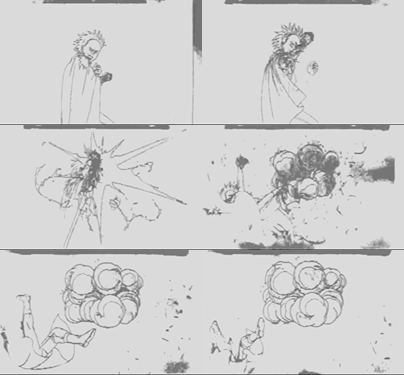
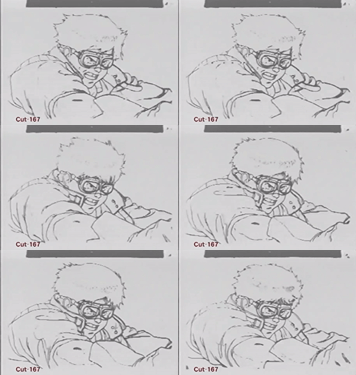
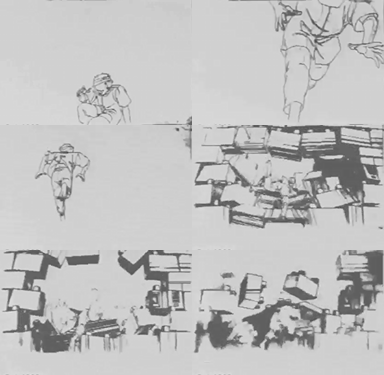
This movie was always going to be expensive and difficult to produce. The storyboards themselves took Otomo one year to draw for all the effort he put into it. Akira used traditional cel animation and analog techniques to create effects that now feel emblematic with old animation of this era. Backlighting for that characteristic glow, animating in the effects of tail-light exposure like video of the 80s, inventing new colors for night scenes. This movie barely has any "mouth-flapping," you can read the lips of the characters!
Animation in the movie also consistently moves between 1s and 2s, rarely are there huge gaps where the animation seems slow or frames hold for long periods of time to save budget. Akira is extremely smooth to the eyes and looks almost unreal at times. Making this monster of over 160,000 pictures was possible thanks to the hard work, dedication and skill of the animators and the tools at their disposal such as the QAR and computer graphics...
video:QuickActionRecorder
This film made use of the Quick Action Recorder which allowed for animators to see the layouts in motion and confirm timing before they went onto paint the cels. This also made the scoring process way easier. Images were taken using a top-down scanner and then played in sequence in video. It's the analog version of watching an animation back in a modern art program rather than manually flipping pages.
tech:ComputerEffects
The film used computer effects for a few different things. The most obvious application is the pattern reader in the movie. The colorful, moving waveforms that the head scientist is obsessed with. It was also used for behind-the-scenes work; to model parallax effects on some backgrounds, plot paths of falling objects and tweak lighting and lens flares. I believe all of this CG work was done by a company called High Tech Lab Japan, which is mentioned in the Production Report.
As said before, this movie was expensive. The most common claim and what sounds most exciting is that it cost 1 billion yen to produce but that's not quite true. This is probably just inflation of numbers. According to Otomo researcher Jun'ya Suzuki and an executive producer of the film, Shigeru Watanabe; it cost something more like 700,000,000 yen. There were additional costs for film corrections and marketing. That's where the 1 billion yen misconception may have come from.
Still the manpower Akira required was tremendous, like all animated films, and that's why the film had its own committee; the Akira Committee. This was the collective title for the numerous animation and production companies that had to come together to make the film. These were the industry's best. Among them there were employees from Studio Ghibli and the like.
Beside stunning animation and visual effects, the sounds of Akira are also iconic in their own way. This movie's score combines the brutality of the future with a distinctly human and traditional element to it. Synths, samples and electric guitars crossing with the gamelan, chanting and chimes. No one better to perform that sound than Geinoh Yamashirogumi.
audio:Soundtrack
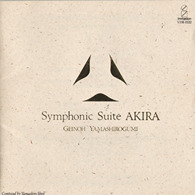
While it was was performed by Geinoh Yamashirogumi (芸能山城組), the music was composed/conducted by Shōji Yamashiro, head of the collective. Geinoh Yamashirogumi blends together MIDI synthesizers with traditional instruments. Otomo commissioned Shōji Yamashiro and the collective after hearing their album Ecophony Rinne. He was given no limits to his process and allowed to do whatever he wanted aside from a few basic themes. In the AKIRA Production Report, Shōji Yamashiro said that: "I wrote [...] music that I wanted to hear, other people be damned."
The soundtrack has 10 tracks.
Kaneda
Battle Against Clown
Winds Over Neo-Tokyo
Tetsuo
Dolls' Polyphony
Shohmyoh
Mutation
Exodus From The Underground Fortress
Illusion
Requiem
Akira's soundtrack enhances the visuals and vice versa. Listening to the OST on its own is just as great but it's hard not to imagine the parts of the movie the track goes with while listening. There's a release of the OST that also included audio and dialogue from the film itself mixed into the tracks. It was called Akira (Original Motion Picture Soundtrack).
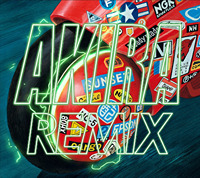
The OST was also kind of re-released in late 2024 in a remixed format. This version of the music played during the Tokyo and Osaka Otomo: The Complete Works AKIRA cel exhibitions and came to be due to popular demand. Disc 1 is all remixes by Makoto Kubota while disc 2 is remixes by Yasuharu Konishi. The cover was done by Otomo himself and it's probably the first time he painted Kaneda's bike in a while.
I was excited for this. Then it came out. Some remixes are good, but a lot of them take more than they give. One track has a British TTS voice over it saying things like "cut" and "paste." It's jarring and that definitely wasn't the intention. The best part of this whole release for me was Otomo doing the cover.
This is the only way to listen to the OST digitally, officially, if you don't have it physically. The OST was available online before on YouTube but I think because of rights issues surrounding this remix it was wiped. Disappointing.
If you want to learn more about the movie's production, I suggest watching the the Production Report. It's a fun documentary and it gives a lot of insight into the film's creation and some of what it was like to be in the Akira studio at the time. If I wrote anything more general here, I think I'd be summarizing the Report too much.
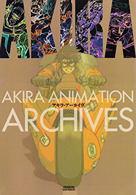
There's also one of the best Akira related books ever: Akira Animation Archives. It goes in depth about the process of the movie. Layouts, character/mechanical design, staff interviews. It has stuff in it you won't see otherwise. The graphic design of the book is amazing; it's what this page of WAKE UP, AKIRA! is directly based off. If you're a particular fan of the movie I think it's a book worth getting.
legacy 評判
With every passing year that Akira drifts further into the past of "retro anime;" it seems like most of what Akira's memory has become to the greater public is the bike slide. People love this damn movie for more than that but it always seems like that's what the general public and casual fans know Akira for. I grit my teeth when I see a motorcycle in any trailer for a new movie, game or animation... I just know it's coming.
Akira (1988) has been praised for the animation probably a million times at this point. People reference and get inspired by the film itself all over the world every day. It's been called one of the best animated films of all time. There have been more than a few attempts to "continue" the film's legacy and make a live action version of Akira. All of these attempts have tanked and failed in various stages of production. Some of these ideas ranged from taking place in a "Neo-Manhatten" to trying to be more faithful to the manga.
game ゲーム
All the games produced or shelved during development only ever followed the plot of the film. Most of these games are bad because of hardware limitations and the fact you can't really turn AKIRA into a game.
AKIRA for Famicom
Japan-only release but there is a longplay of the English fan translation on YouTube. There's an old trailer as well. This game is interesting. It's a visual novel where you play as Kaneda and you pick options from a list to progress. It's also bad and funny, the spritework makes me laugh whenever I see it. It's better than some of the other games but still jank.
AKIRA for Amiga and GameBoy
I don't actually know anything about these. There's an Amiga longplay on YouTube and I think it was produced by a British company? It looks awful. The description says it's one of the worst games ever made for the Amiga. Sounds right.
AKIRA for Sega Genesis
I've actually played this prototype on an emulator. It's very bad. I don't have much to say about it because it's that bad. It's also hilarious and it bricks when you try to play the level based on the end of the movie. This also has sheets on Spriters Resource and some footage on Youtube.
AKIRA for SNES
I think this was supposed to be similar to the Sega Genesis game? I don't know. A prototype that never got finished. Some sprite sheets are available on Spriters Resource. I also found this image from some old games magazine that talks about it and shows a screenshot of the game:
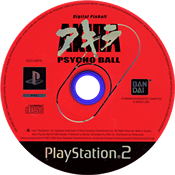
AKIRA Psycho Ball for PS2
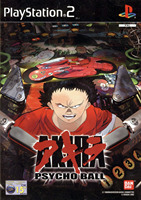
In my opinion this is the only good Akira game. It only released in Europe and Japan in 2002 and it was developed by KaZe Co, Ltd. You can watch a longplay of it on YouTube. I feel like this game was made in a lab just for me. My guilty pleasure is pinball games and I've always wanted Psycho Ball. The soundtrack is really good at capturing the Geinoh Yamashirogumi sound. The designs are unique, the pinball tables snapping together is a nice touch.
me & akira 俺とアキラ
For me the film is a whole other experience compared with reading the manga. The movie is more hopeful, a little less intense. I agree with Otomo's "visual piece, not character piece" statement. Watching this movie one day 5 years ago is how I got AKIRA into my life. It's my favorite film of all time. I think the film is perfect but I also recognize the flaws it has but I just like it more. All the work went into it and the aspects people never talk about is even more appreciated.
 I was excited for this. Then it came out. Some remixes are good, but a lot of them take more than they give. One track has a British TTS voice over it saying things like "cut" and "paste." It's jarring and that definitely wasn't the intention. The best part of this whole release for me was Otomo doing the cover.
 If you want to learn more about the movie's production, I suggest watching the the Production Report. It's a fun documentary and it gives a lot of insight into the film's creation and some of what it was like to be in the Akira studio at the time. If I wrote anything more general here, I think I'd be summarizing the Report too much.
 AKIRA for Sega Genesis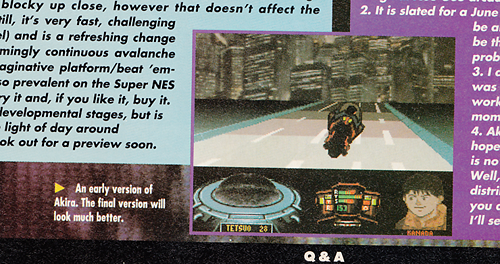
 In my opinion this is the only good Akira game. It only released in Europe and Japan in 2002 and it was developed by KaZe Co, Ltd. You can watch a longplay of it on YouTube. I feel like this game was made in a lab just for me. My guilty pleasure is pinball games and I've always wanted Psycho Ball. The soundtrack is really good at capturing the Geinoh Yamashirogumi sound. The designs are unique, the pinball tables snapping together is a nice touch.