
WAKE
UP
AKIRA
AKIRA アキラ is a science fiction seinen series written and illustrated by Katsuhiro Otomo. AKIRA first began serialization on December 6, 1982 in Kodansha's YOUNG Magazine. The last episode was published on June 25, 1990. Since then all 120 of its episodes (parts) have been compiled into six large tankōbon volumes with many international variations.
The story was also adapted into an animated film of the same name in 1988. This was while the manga was still being serialized and collected into books. The film was directed by Otomo. It serves as an interpretation of the story rather than faithful recreation. It's one of the most famous animated movies of all time and helped usher in a new era of mature animation for the 1990s.
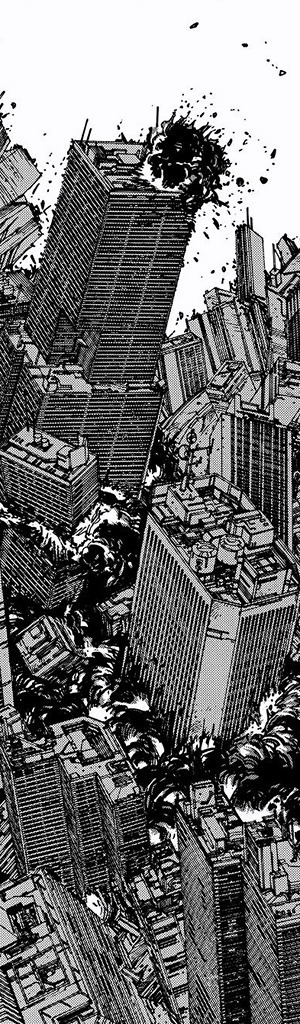
The manga takes place in the city of Neo-Tokyo, 38 years after a new type of "bomb" exploded over Tokyo and triggered WWIII in 1982. Biker gangs, civil unrest and an inept goverment run the city in 2020. Psychic powers, government experiments and explosive SF action... all contained within 2,200 pages!
What AKIRA is goes past these anti-government groups and gang fights. It's really about losing balance and how delicate humanity is. It's about a friendship. Interpersonal conflicts set in the sprawling metropolis of Neo-Tokyo.
PROFILE
 Otomo Author |
 Kaneda |
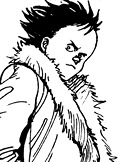 Tetsuo No. 41 |
 Kei |
 Chiyoko |
 Joker |
 Yamagata |
 Kai |
 Kaori |
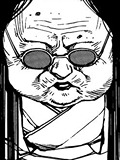 Miyako No. 19 |
 Takashi No. 26 |
 Masaru No. 27 |
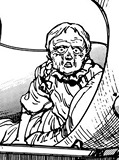 Kiyoko No. 25 |
 Colonel |
 Doctor |
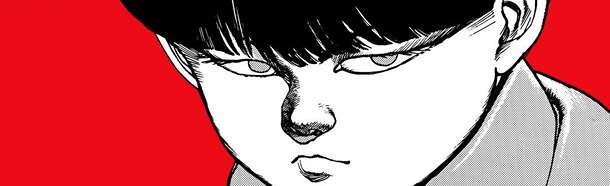
Akira
No. 28
MAKING AKIRAア
Before working on AKIRA Otomo had published various comics and anthologies that garnered a lot of interest in his work. Before AKIRA there was Fire-Ball (1979) and Dōmu (1980). Kodansha wanted Otomo to create a series for their YOUNG Magazine but he was busy working with other publishers at the time on these comics. Fire-Ball was rushed with a dissatisfied ending but Dōmu's success was strong and these two works set the stage for AKIRA to come next. AKIRA is the longest work Otomo has done to date.

Otomo and his assistants worked on a biweekly schedule. He and his assistants had two weeks to complete ~20 pages for the next episode's release. Otomo also completed a title page for every episode, a practice he'd gotten used to doing himself since his early works. Some episodes of AKIRA opened with watercolor versions of some illustrations as well.
At various times during AKIRA's serialization Kodansha wanted to change the schedule so new episodes came out weekly due to the rising popularity of the series. Otomo refused to change his schedule and stuck to his biweekly routine compared to other popular series AKIRA was serialized alongside like Be-Bop High School. There's two times this biweekly schedule was majorly broken. That was from April 1987 til late 1988 for the movie. Another time when Otomo had to recover from illness.
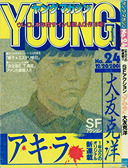
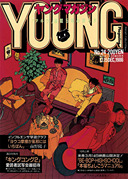
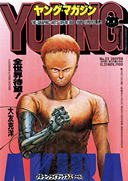
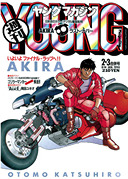
L to R: part 1, part 82, part 88, part 111
Otomo actually didn't expect that the series would last more than a few pages or chapters at best when he started it. He was also worried if the audience of YOUNG would like it or not but they certainly did. People were enamored with AKIRA.
When it came time to make AKIRA into a collection, Otomo has having difficulties getting it made his way. His editor had brought him a test-print of AKIRA pages in a B5 format, not the usual shrunk-down size. From then Otomo wanted the AKIRA books in a larger print size. His reason was that he wanted a "nice, thick, satisfying book." To the idea Kodansha said no. Well, then he wouldn't put out the book or any books for AKIRA for that matter...
Yet people had already started to photo-copy and bind together YOUNG episodes into their own collections and they were even selling them. Due to demand from fans, these bootleg books circulated pretty well but it was obviously bad for Kodansha. So enough! The fans wanted a collection so bad that they created a petition asking for Kodansha to publish the book was created. It was mailed in with tens of thousands of signatures!
The process to make the first volume and the rest wasn't easy. Aside from the production of larger volumes with fancy back covers-- ranging from art sent through scanners to produce special effects, to projecting an image of the cover onto a large screen at a racetrack-- Otomo had to edit his own work while still completeing the rest of the series. He had to do this so that the flow was better for a collected work. He updated some of his old art, redrew entire panels, created new pages and cut-pasted panels and pages as he saw fit.
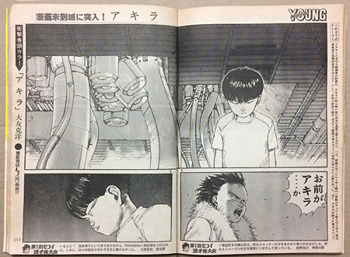
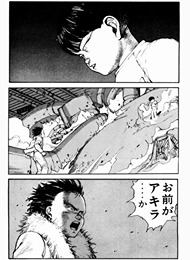
YOUNG issues are valuable to collectors since they have art exclusive to Japan
The first volume of AKIRA sold well, printing around 200,000 copies only in its first run which needed an immediate reprint to keep with demand. During this long whirlwind of production, illustration and serialization Otomo was approached to turn AKIRA into an animation. It was never actually Otomo's intention to adapt the series into a film but he would do it if he retained creative control.
To read more about the movie's production, go to the film page
By the time AKIRA had been turned into one of the best animated films of all time, there were now four volumes in print and over two million copies sold. AKIRA was everywhere. The movie was a success domestically but had yet to break through in the West, being released a year later in 1989. It already had some dedicated fans, the types to already be into Japanese animation, but it had yet to have it's eventual "cult classic" resurgence. Yet all this noise about "Akira! Akira! Akira!" drew some attention...
The westernization of AKIRA was an labor-extensive process itself. It was picked up by Epic Comics editor-in-chief at the time, Archie Goodwin. He worked with Kodansha staff to get AKIRA overseas. This process to westernize AKIRA involved flipping pages so they read left to right. Otomo, his assistants and Epic employees had to go back and edit his work just to replace the original balloons with new art and make AKIRA work in this new format.
The entire series was flipped from right to left to left to right, original onomatopoeia replaced with English sound effects, vertical balloons erased and horizontal ones added, lettering redone, original art and backgrounds redone to accomodate the English balloons and SFX... Even the translations created a kind of different sense of character and world. In this effort, AKIRA became a new story for American audiences to read. American AKIRA wasn't in black-and-white though. It arrived to the USA in full digitized color, being the first manga ever colored digitally. Through the use of color guides made by Otomo himself, Steve Oliff overlooked the colorization at Olyoptics. But it's likely Otomo left the colorization work entirely to Oliff and Olyoptics around Volume 4.
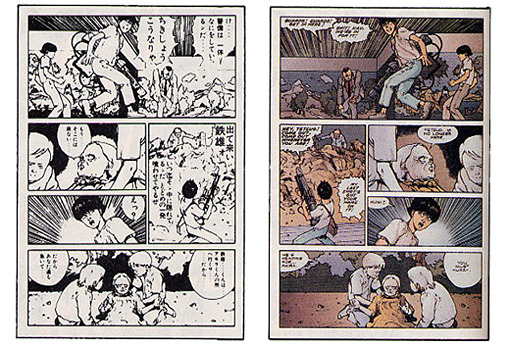
This digital colorization of AKIRA had to go through multiple steps. Proofs were put in a scanner and when the color was added digitally, that information was put on floppy disks and sent to another company to produce the film. AKIRA was basically colored in physical layers to make the complete image.
Personally I'll always dislike the westernization of AKIRA. It was done to make the series understood by and more marketable to a crowd that read comics a certain way, but I think for that AKIRA lost too much in the process. Reading the Epic Comics version of AKIRA doesn't feel like the same story to me. AKIRA became the first in some things because of this process which is cool, but even Otomo himself has looked back on the work done and commented on it being amateur.
I know without this work there's a chance AKIRA never got the presence it has in the West. The work was impressive but I don't have to like the end result.
AKIRA finally finished in 1990 with 120 episodes. From the point it began serializing, that makes it 43 years old at the time of me writing this. When he was younger Otomo tended not to dwell on his completed works so he moved on from AKIRA in order to prepare himself for his next projects. The world obviously hasn't moved on though.
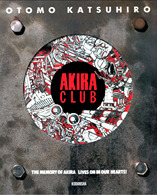
The movie has a few art books and supplementary materials but AKIRA Club is the definitive "artbook" for the manga. It collects every title page produced for every episode, concepts, advertising design, unused art and more. This book was published in 1995. It's one of my favorite AKIRA books that isn't just the manga.
:: AKIRA, Currently ::
The manga is being rereleased through Otomo: The Complete Works.
This version of AKIRA aims to recreate it as it was in YOUNG with the original title pages and as much original art included as possible. These releases are being divided into years of Otomo's life spent working on AKIRA. For example "AKIRA 1" isn't actually the entirety of what would be collected as Volume 1; it's AKIRA from 1982-1983 when he was 28-29 years old. By the end, the Complete Works version of AKIRA should be 8 books in total.
Here are the current releases:
- Otomo: The Complete Works #12 AKIRA 1 2024-08-28
- Otomo: The Complete Works #13 AKIRA 2 2025-04-18
- Otomo: The Complete Works #14 AKIRA 3 2025-09-02
- Otomo: The Complete Works #15 AKIRA 4 2026-09-30 !TO BE RELEASED!
There's also an animated series in production at Sunrise that was announced by Otomo himself at Anime Expo in 2019 with no real updates since. It's supposed to be a faithful adaptation of the manga in its entirety. Personally I can't wait for news on this series.
AKIRA'S LEGACYキ
Do you like animanga? Do you live in the West? You should probably thank AKIRA that it's popular in the first place. The efforts to westernize AKIRA for overseas audiences is-- not the only reason why but-- one of the big reasons you can read My Hero Academia on your lunch break. It shattered a lot that came before and Otomo's work is clearly a force to be reckoned with. There are countless dedicated fans and so many people who work in the industry or as hobby creatives who cite the film or manga as a big inspiration for them getting into art and animation.
The film itself endures as a pillar of the era of cel animation excellence. The work that's gone into the film has been studied and praised so many times. All of which I think is deserved. The manga itself has so many iconic panels that people constantly bring up... I've already talked about how good the manga is and the work that went into it. But the main reason why this main page focuses on the manga and the film is dedicated to its own page is because I feel like the manga gets overlooked a lot in favor of the movie.
Ask many people who've seen it and a good number of them might be shocked there's a manga in the first place. The mainstream focuses on the "Akira slide" for that easily marketable pop culture brownie point. It's like this collective compulsion, anytime a motorcycle is in a piece of media it has to make the reference. It's frustrating to me. There's little to AKIRA beyond a few memes for people but I guess I shouldn't be surprised by that. I just want people to fully appreciate the manga. They wouldn't even have an "Akira slide" or stupid memes if the manga didn't exist!
For a lot of people, AKIRA's time has passed a while ago. Some call the art ugly, dated and they shit on AKIRA just for the sake of it because of how influential it is. No actual criticism or interesting points brought to a conversation. I've seen people actually complain about AKIRA because of all the Kaneda slide references. Well, besides how people like to milk a 3 second shot dry, I don't think AKIRA will ever be old news. Too much of what you see today in animation and art is thanks to Otomo's work on AKIRA. He left his mark whether you like it or not.
I hope AKIRA's legacy lives for decades to come. It definitely will in the hearts of its fans, but that legacy has to go beyond aesthetics for everyone outside that bubble. If you reading this haven't thought about AKIRA beside the big references: Try to understand and invest your interest into the world and art of AKIRA. I guarantee it'll blow you away.
WHAT AKIRA MEANS TO MEラ
 AKIRA is everything to me. Nothing else in the world comes close to what AKIRA is to me. I have things I like but what I give a damn about in this life is AKIRA. I first watched/read it in early 2021. Since then I've watched the movie over a dozen times, read the manga several times. I think about it every day and AKIRA isn't just a cool story with cool art to me. It's the source of my fictional identity. I take a lot of pride in that. AKIRA is alive within me; it'll stay with me forever.
アキラはまだ俺達の中に生きてるぞ!